
Project transportation
PLANNING THE MOVE.
START TO FINISH.
Freight, equipment, routes, permits, and site coordination. One transportation plan built around your work.
01 / Planning the move
THE DETAILS WORK
BETTER TOGETHER.
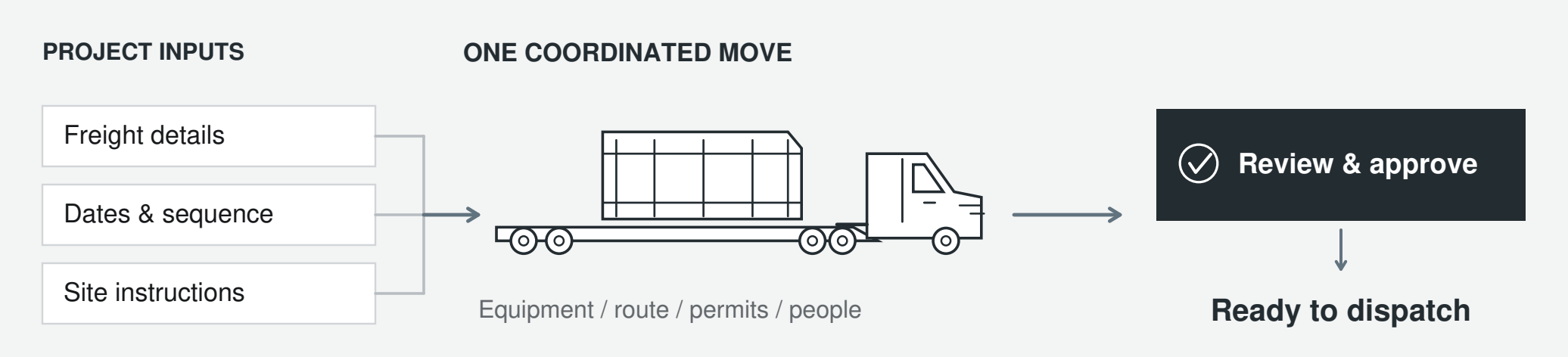
Freight, equipment, route, and site requirements belong in one transportation plan. Preparation before dispatch helps reduce last-minute changes, missed receiving windows, and avoidable waiting.
- Your schedule guides the plan.
- Pickup dates, delivery windows, and the sequence of the work shape planning. We account for site readiness and discuss where timing has flexibility so transportation fits the work around it.
- The right load information.
- Dimensions, weight, center of gravity, and available drawings guide the equipment and loading arrangement. Special handling needs and support points belong in the plan before a truck is assigned.
- One coordinated move.
- Equipment, permits, site access, and dispatch depend on one another. A change to the trailer or load arrangement is reviewed for its effect on the route, loading method, and schedule.
- More than one set of eyes.
- Planning, dispatch, and field personnel bring their experience to demanding moves. Questions go to the people responsible for the work before release.
- Room for the unexpected.
- When a load is delayed or a site is not ready, we explain available adjustments and their effect on safety, permits, timing, and cost so you can make an informed decision.
- Ready for dispatch.
- The driver and field team receive approved load details, the equipment assignment, and route instructions. Everyone carries out the same plan from pickup through delivery.
02 / Equipment selection & load approval
PROPER EQUIPMENT.
REVIEWED AND APPROVED.
The truck and trailer must work with the freight, the route, and the sites at both ends. Final selection and availability depend on the requirements of the move.
- Dimensions and loaded size.
- Shipping dimensions, deck height, and cradles, blocking, or supports determine the complete loaded size used for route and permit planning.
- Weight and distribution.
- Total weight, load position, axle loadings, and route requirements guide the configuration—not the commodity weight alone.
- Center of gravity and support points.
- Balance and support points guide trailer position. We coordinate with your technical contacts on concentrated weights, unusual shapes, and limited support before loading.
- Loading and unloading.
- Whether cargo is driven, lifted, or placed onto the trailer, the arrangement must work at both ends. Available space, handling equipment, and personnel shape the selection.
- Review and approval.
- Proposed equipment, the securement approach, and drawings are coordinated with the people responsible for approval. Required engineering remains part of the process before release, with responsibilities established for the move.
03 / Route planning & permitting
A WORKABLE ROUTE.
PERMITS IN PLACE.
Our team coordinates permit submissions and follow-through with the agencies involved. Required permits and travel instructions must be in place before dispatch.
- Clearances and site access.
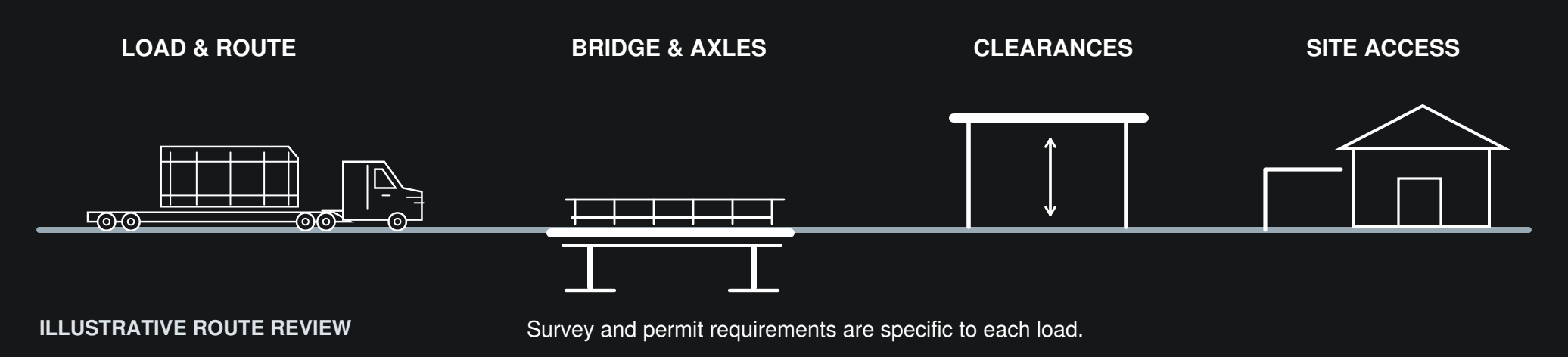
- Turn radius, roadside obstructions, overhead clearances, entrances, and the final approach to each site all receive attention in route planning.
- Bridge and axle requirements.
- Bridge limits, axle loadings, and lateral inch load requirements affect the setup and route. Additional analysis is coordinated with the appropriate bridge or engineering professionals.
- Agency coordination.
- Established contacts across multiple states help us prepare submissions, address questions, and follow up on approvals. The approved route and permit conditions stay together for dispatch and field personnel.
- Surveys and travel planning.
- When a move calls for a route survey, added support, or an alternate route, those requirements become part of the plan. Survey and permit requirements are specific to each load.
- Permitting around your schedule.
- We start with your timing in mind and keep you informed as requirements are addressed. Agencies control approvals and travel conditions; Coastal handles preparation and follow-through.
04 / Onsite coordination
COORDINATION
WHERE IT COUNTS.
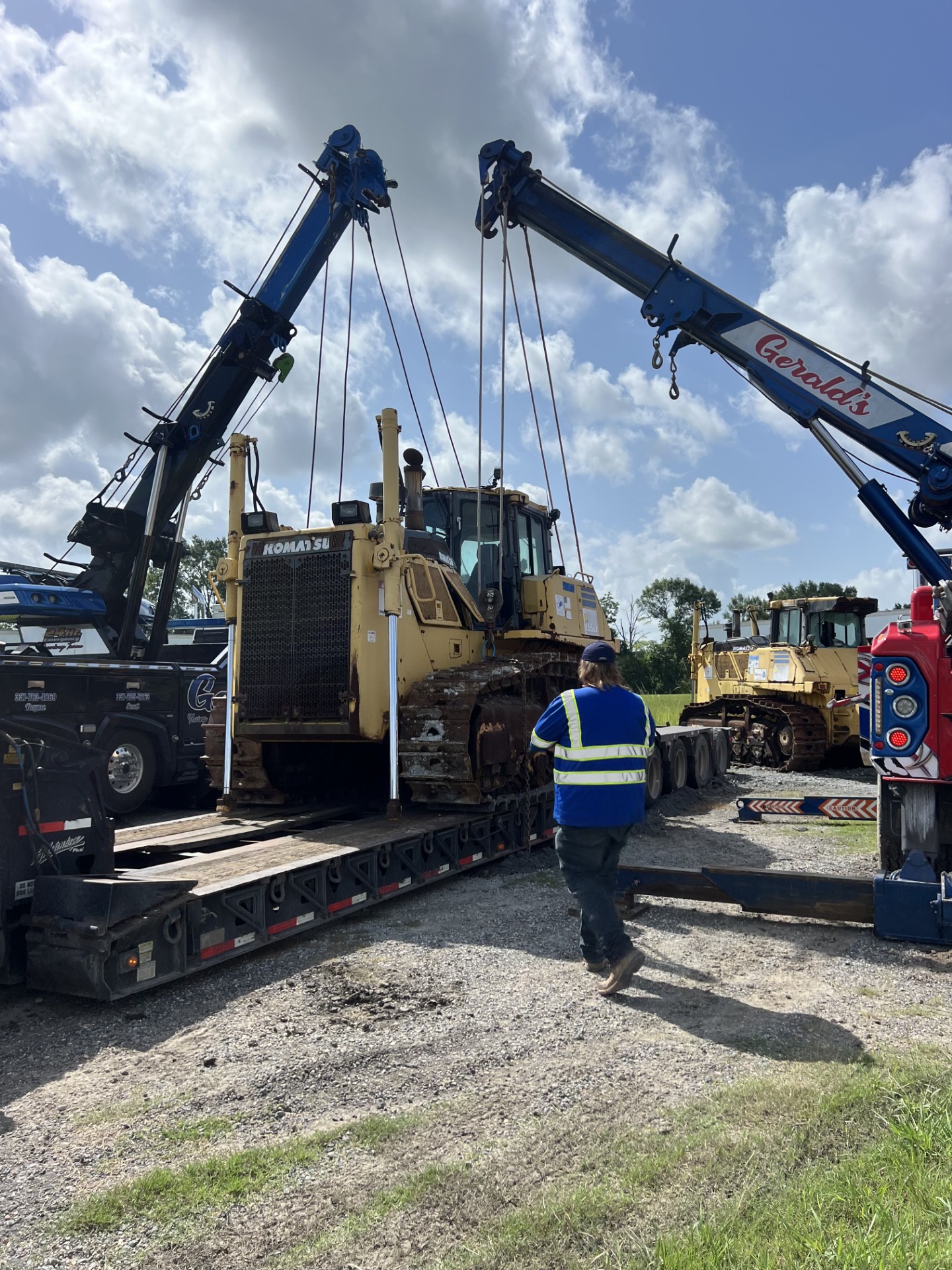
Clear arrival instructions, site contacts, and handling arrangements connect transportation to the work on the ground.
- A point of contact at the site.
- Your Coastal contact works with the site contact on arrival instructions and access, so your team knows who to call at the gate or during loading.
- Support within the agreed scope.
- When loading or unloading supervision is needed, we coordinate it as part of the agreed scope. The plan establishes who supervises and who is responsible for handling equipment.
- Drawings and site preplanning.
- Where required, loading, unloading, and tie-down drawings help establish trailer position and the handling sequence around the available space, people, and equipment.
- Field observations.
- When conditions differ from the plan, field personnel raise concerns with the appropriate site contacts so the next step is clear before work continues.
Your next move